


Menu
By theme
By theme


{{ variable.name }} : {{ variable.values[selectedVariantsIndex[variable_index]].name }}
Quantity:
A spacer disc is never the lead in a strand, but leave it out and the beads begin to gnaw at one another. Two hard main beads rubbing together for years will fray the edge of their holes sooner or later; the disc sits between them and takes that wear in their place. It also governs rhythm: a run of plain beads, a metal disc, another run of plain beads, and the eye has somewhere to pause. On old strands you often find a copper disc worn bright with its edges rounded off, and that is decades of contact with beads.
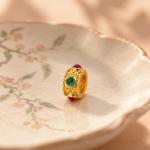
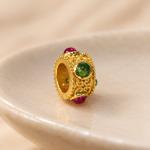
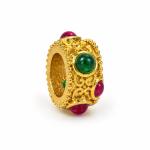
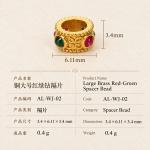
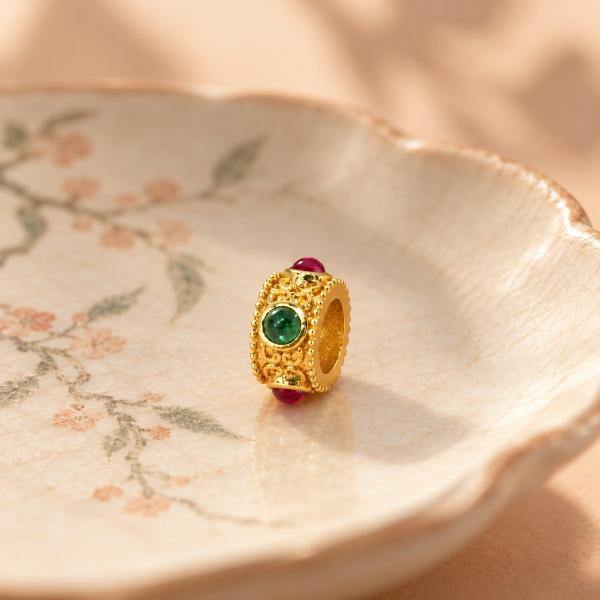
This one is a round disc with a single hole, flat on both faces and finished with a fine raised rim. Thickness sets the spacing: a thick disc opens a wide gap and the strand reads loose, a thin one lets the beads sit close and reads dense. Decide which effect you want before buying, and keep to one thickness within a strand. If the hole has been left with a burr, the thread will fray as it passes; hold the piece up to the light and look at the inner wall when it arrives.
The base is copper with gold plating over it. The plating is thin and bright, close to fine gold when new, and in time sweat and friction take a layer off and the copper shows through underneath. Copper showing is not damage — plenty of people wait for that stage and prefer it to the first yellow. Plated work dislikes perfume and hand soap, so keep it clear when you spray or cream your hands. Plating is measured in microns; well-finished pieces feel smooth, poor ones have a stipple and can even go green.
Red and green are the hardest pair of colours to reconcile in a strand. Handled well they look expensive; handled badly they look like New Year decorations. This disc presses both colours onto one small face, which keeps the area — and the conflict — small, and with dark wood beads or a black cord beside it the red and green become two points of light rather than a contest. The two stones should be close in size and set flat, with no step under the fingertip; that is where the workmanship shows.
String it between two main beads rather than against the Buddha head, where the three-hole bead already does the job. The plating scratches, and a few days in a bag with keys will leave fine lines on it. Wrap it in soft paper and store it apart from silver, since two metals rubbing together mark each other. Three to five discs in a strand is enough; more than that and the strand looks fragmented, with no point of focus left.