


Menu
By theme
By theme





{{ variable.name }} : {{ variable.values[selectedVariantsIndex[variable_index]].name }}
Quantity:
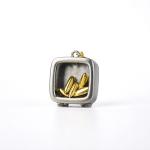
The name reads seven rice grains, with the characters in a different order from the shop's other seven-grains-of-rice piece, and with a different item number, so do not confuse the two links. The approach is close: seven grains in relief across the face, the same count, differing in arrangement and in size, which makes the item number the reliable way to tell them apart. Both have the hole at the top edge and string the same way. The number is stamped on the back in small characters that need light to read. The two weigh about the same, and you cannot tell them apart in the hand.
The grains are not identical in shape, some longer and some rounder, so that piled together they read as a pinch of real rice. Cast grains come with slightly rounded edges that do not prick, and the channels between them are shallow, so light does not get in and they read dark, which is what makes them more interesting than a polished plaque. The channel floors are flat, left by the mould rather than by wear. Each grain edge has a shallow bevel and will not cut. The heights are about even, so a finger finds a row.
The body is small and hangs at the collarbone, and does not push at a high collar in winter. Listed as a pendant, it also works as a bag charm or a keyring. The hole is at the top edge and takes cord or chain; cord frays with use and is cheap to replace, cheaper than a chain. The body is light, visible when you look down, and does not get in the way when you raise a hand. A fine chain on a small plaque turns over, which is the usual trouble with small pendants.
The seven grains have circulated in folk custom for a long time, with explanations that differ. Some say carry seven grains when travelling for a smooth road; others say that when moving house you leave seven grains in the rice jar as a starter. These are customs. On a brass pendant the point is carrying the thought, not expecting it to run errands for you. Seven appears often in folk usage, seven stars and seven treasures both taking seven, and in some places seven grains are called seven rice, a different name for the same thing.
Brass is not coloured, and its own tone runs red-yellow, warmer than white copper. Brass has a smell, and after a while the hands carry a metallic note that washing takes away. Dark hollows are normal oxidation rather than dirt; to clean them, dry-brush with a soft brush and do not soak the piece. Brass alloys vary, so sensitive skin should watch for itself; reddening over time is the start of verdigris and wipes off. Brass dislikes the salt in sweat, so wipe it on summer days. Unplated, the colour comes from the alloy itself.