


Menu
By theme
By theme



{{ variable.name }} : {{ variable.values[selectedVariantsIndex[variable_index]].name }}
Quantity:
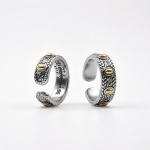
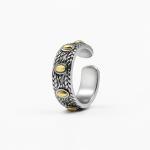
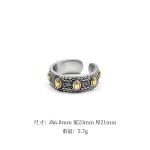
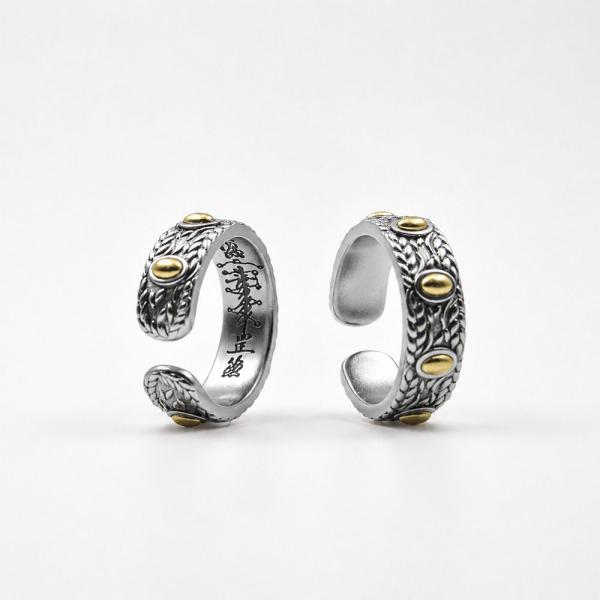
Seven grains sit in a column on the face, rounded and blunt, with characters on either side of them. Vintage here refers to the surface treatment: hollows pressed dark, raised faces left bright, so it looks like a piece worn a few years, though it is not an old one. The dark is dyed on and comes off under hard rubbing, and what shows beneath is new copper, a difference in tone you see at a glance. The face is not wide, with space left on both sides, so it does not crowd a short finger. The dyed dark sits in the hollows; the raised faces keep the copper's own colour.
The band is open, with a gap, and it will bend. The seven grains run down the front, so grip the sides when you bend it, not the grains. Grip the grains and the force lands on a single point, and they skew. Copper springs back, so open it a little wider than the fit you want and let it return; a little at a time, three goes rather than one, is steadier than forcing it. The spring has limits, and bent too far it will not close. You can hear the copper spring as it opens, very faintly.
It is filed under pixiu and wealth, while the name says seven grains of rice: the pattern is grain, and the category sorts by meaning, which does not always match the motif. Shop by category and take note; if you want a pixiu, look through the other pieces in that group rather than hunting for one here. The pixiu designs carry their own numbers, so do not read the two together. A category is a door, not a description. Other subjects are filed there as well, and a look through makes it plain.
In folk custom the rice grain stands for a number you can count, saved one at a time, and seven across a ring face carries that. Seven is used widely in folk practice, seven stars and seven treasures and seven grains, mostly for small but complete: a small count, easy to remember, easy to count. The spacing is not quite even, slightly wider in the middle and narrowed at the ends, which keeps it from looking stiff. Once the rounded tops of the grains polish bright, the characters beside them read darker by contrast. Seven in a column, and the back of the finger is the front.
White copper is hard, so fine grains hold their shape, and in time the tops brighten while the gaps go black. Clean with a dry soft brush and do not pick with a needle. Keep pliers away from the two ends of the opening; the copper is brittle, and a jaw mark will never close tight again. It contains nickel, so sensitive skin should test-wear. If the base of the finger is thick, leave a gap when closing instead of shutting it fully. Bend an open white copper band repeatedly and fine creases form along the gap edge, which no soft cloth will rub out.