


Menu
By theme
By theme





{{ variable.name }} : {{ variable.values[selectedVariantsIndex[variable_index]].name }}
Quantity:
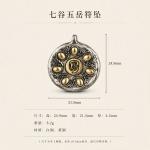
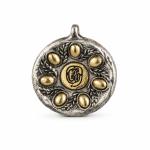
Chasing is worked with a small punch struck again and again. The line is not cut by a graver, and its edge carries a slight burr, so under magnification it is a row of small pits forming a line. This plaque follows that method: the hollows take colour, the raised parts stay bright, and the pattern has a layer of handwork roughness that cast pieces lack. The punch tip is blunt and forces the copper aside, so the metal swells slightly on both sides of the line; light and heavy blows make the line thicken and thin. A chased line is not straight, which is the hand shaking, and it is part of the character.
Aging dyes the hollows black and leaves the raised faces bright. The pits of a chased line take colour most readily, which is why the lines read darker than the copper. Aged is not the same as old, and the distinction matters: it is a process, not a date. After dyeing the piece is wiped so the black comes off the raised faces and stays in the hollows. Within a batch the depth of black is never identical, and that is not a fault to pick at. The aging solution smells strong, so let the piece air for two days after it arrives.
In folk custom seven grains of rice means carrying seven about, taking a number that completes. Casting, chasing and engraving are all done; chasing takes the labour, so output stays low and the price will not come down. Grain sizes are uneven, which is normal for chasing, since seven identical round grains would look cast. The gaps between grains are narrow, and chasing them means pass after pass that cannot be hurried. Cast pieces are about regularity, chased pieces about feel, and the two are looked at differently. Chasing one piece takes the labour of casting ten.
The pendant is small, with the hole at the top edge. A cord is steadier than a chain here; the body is light and a thin chain lets it turn. Keep silver cloth away from an aged copper face, since one wipe smears it and the black lifts unevenly, looking repaired. The four corners are rounded so they do not catch on fabric when the pendant is tucked inside a collar. On a small face what counts is the spacing of the pattern, not the quantity of detail. Run the cord to chest length with the face outward so the chase marks catch the light. Cord stretches wet and shrinks dry, so leave a little length.
White copper is hard and holds the chase marks. Brush dust out along the lines with a soft brush and do not use a needle, because copper is soft and a pick leaves a scratch. Take it off for showers, since the aged layer dislikes soap left soaking. It contains nickel, so sensitive skin should take note. Chased pieces are not polished, because polishing flattens the marks. If a line breaks it cannot be joined, and the plaque has to be made again. Copper dents at an edge and the edge rolls, and once rolled it will not press flat.