


Menu
By theme
By theme

{{ variable.name }} : {{ variable.values[selectedVariantsIndex[variable_index]].name }}
Quantity:
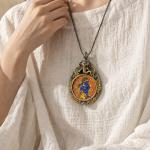
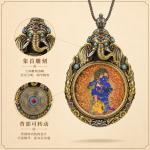
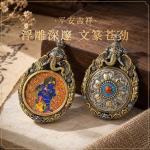
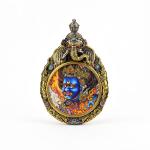
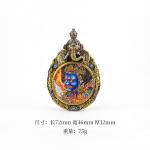
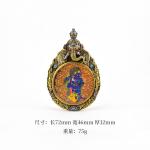
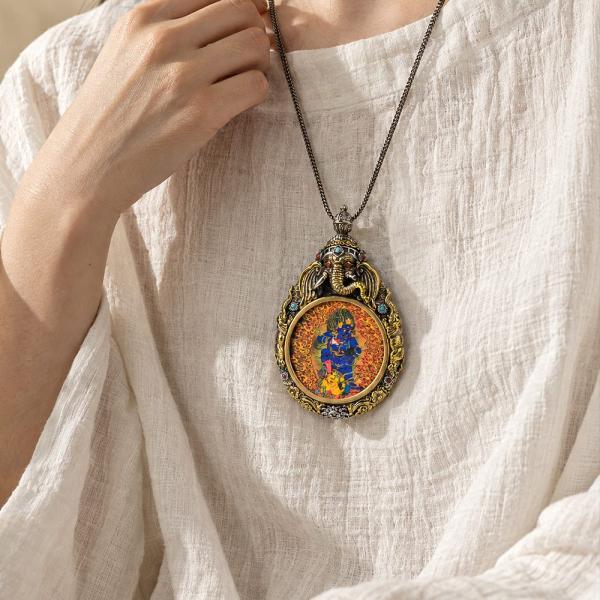
A Buddhist plaque is a small piece worn on the body in Tibet, usually copied from temple sculpture and reduced to hang at the chest. This one comes in two options, one with Mahakala carved and one with Zhaji, both listed under the large elephant-god version. Only the figure on the front changes; the body and the size are the same, so choose by the face. The plaque is fairly thick, so pick a sturdy cord. The hole is at the top and takes cord or chain.
Mahakala is a protector in Tibetan Buddhism, the name itself Sanskrit, with two-armed, four-armed and six-armed forms. The face is fierce, and what it stands for is subjugation. Han temples rarely have a separate image, mostly in tantric halls; every school in Tibet has one, and the form changes with lineage. The six-armed figure is the most complex, and on a plaque it is usually reduced to two or four arms to stay readable. Read the hands first: the implements differ, and so does what stands underfoot. Look long enough at protector images and the ferocity turns out to have rules.
Zhaji is a goddess worshipped around Lhasa, with heavy offerings; her images mostly take female form, which is a different matter from a protector's ferocity. Putting her in the same listing as Mahakala is the shop's arrangement: the two have different natures, so do not take them for a pair. Zhaji Temple stands on the northern edge of Lhasa and receives drink offerings, unlike other temples. Most buyers choose by the face, and the one you like is the right one. Goddess images are usually kept inside a hall rather than out in the open.
A large plaque has weight and hangs low at the chest, so pick a stronger chain. A fine chain with a heavy plaque fails at the clasp first; a cord has one less thing to rub than a chain, so the face lasts longer. The face is in relief with the hollows darkened, and the figure is small, so from a distance you see only an outline. The edge carries a raised line, a hard edge under the finger, and it takes a few days to settle against skin. The rim is thick and will sound against a desk.
White copper in its own colour, unplated. A Buddhist plaque is worn against the body, and on a sweaty wearer the back dulls first, which is normal. Clean the face with a dry cloth, and do not go over the hollows of the face with a wet cloth again and again, since water collects there and dries slowly. It contains nickel, so sensitive skin should wear it over a layer of clothing. Run the chain a little longer so the plaque sits at the centre of the chest and does not block the collar. Cord slackens with use, so retie the knot now and then.