


Menu
By theme
By theme


{{ variable.name }} : {{ variable.values[selectedVariantsIndex[variable_index]].name }}
Quantity:
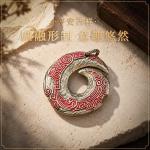
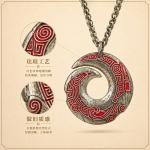
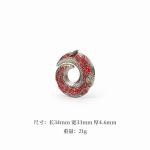
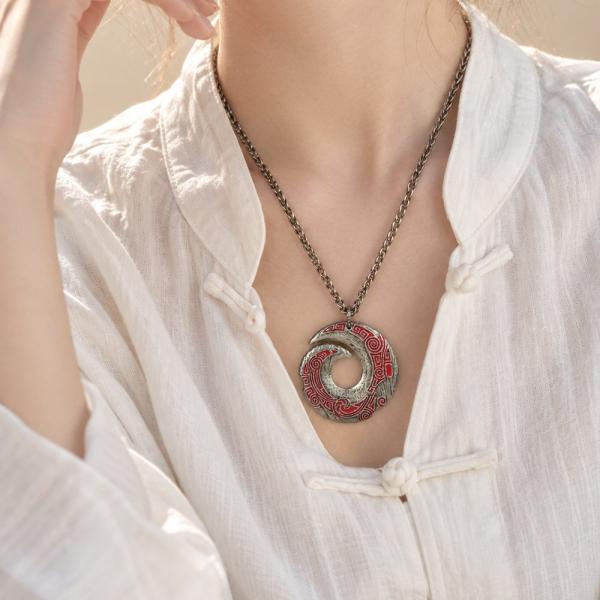
A ring has no beginning or end, just a closed circle, and folk custom calls this shape a turning ring, taking the sense of going round and coming round to something good. The phrase in the name is an old saying: fortune rises and falls, and in some year it turns your way. The ring is the same thickness throughout, with no taper, and therefore no front or back. The diameter is modest, and hanging, it falls at the centre of the collarbone; the inner face is smoothed round and does not scrape. The hole in the ring is small, and a fine chain passes through exactly.
Whether the section is round or flat decides how it feels against the chest. A round one rolls, and its light is soft; a flat one lies close, and its light comes in one sheet. The weight of a pendant like this rests on the shape itself, with pattern secondary, and a plain ring holds the eye longer. Patterned versions carry the pattern on the outer face and leave the skin side plain. A flat section covers more skin and feels hot in summer. The ring is even in thickness, so it balances in the hand. Plain surfaces are easier to wipe than patterned ones.
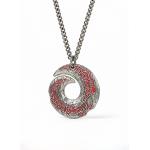
Two options, the ring alone or with a Chopin chain. The chain passes through the ring and the ring slides on it, with a small sound as you walk, which is normal for this design. To stop the movement, add a small jump ring to fix it and the noise goes; where the chain rubs it leaves a small bright patch. The ring-alone option comes without a chain, so you supply one, and a cord looks good too, lying closer to the skin through the hole. The clasp is small, so hold both ends when putting it on.
The turning idea is loose in folk custom: red at your zodiac year, rings, gourds, all the same impulse under different forms. Those who believe treat it as a thought to keep; those who do not treat it as a geometric ornament, and the two do not conflict. In the Chinese heartland it is also called a peace ring, a different name for the same shape. Customs differ by region and so do ways of wearing it, so there is no need to overstate the case. The ring also serves as a protective piece, for the sake of being round.
White copper in its own colour, and the inside of the ring takes the most rubbing, so it brightens first. A plain ring is easy to wipe; a patterned one needs a soft brush. It contains nickel, so do not squeeze hard where the ring is thin. Take it off for showers, since water collects inside the ring and leaves a watermark in time. Worn long, the inside develops a bright band from rubbing, which is not plating worn away. The ring is thin, so a knock flattens it, and a flat ring cannot be bent back round.