


Menu
By theme
By theme

{{ variable.name }} : {{ variable.values[selectedVariantsIndex[variable_index]].name }}
Quantity:
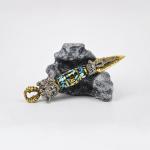
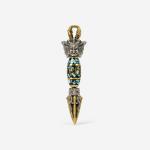
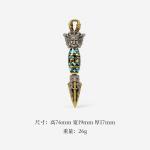
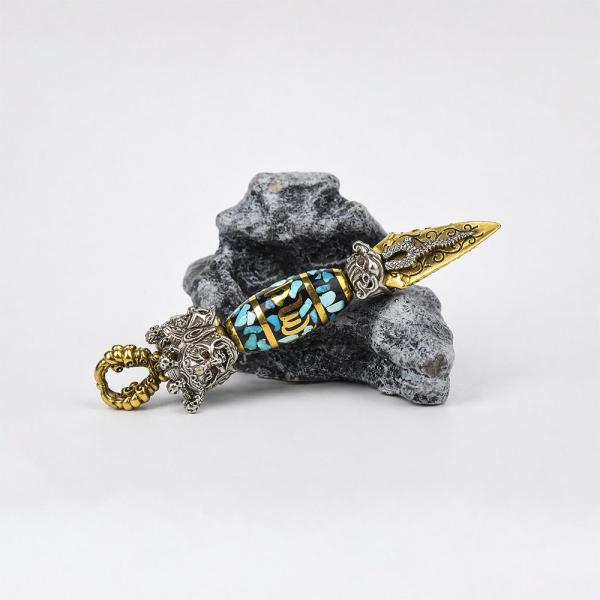
The phurba is the vajra dagger: Tibetan calls it phurba, and Chinese translates it as peg. Three-faced refers to the three faces at the head, one image carved on each, tapering down into three-edged blades that meet at a point. This one follows the standard pattern, with no long or short variants and a single size. The three faces are equally wide, so turned in the hand each reads true. The body narrows in the middle, which is where it is held. The ridge lines between the faces should be straight, since a lean shows at a glance.
In Tibetan Buddhism the phurba is an implement for pinning the ground. When a mandala is drawn and a boundary set for a ritual, pegs go into the four corners to fix the extent. Made into something carried, it shrinks, the ridges stay, and the point stops being a point, so it does no harm on the body. Ritual pegs come in sizes, while carried ones are made small; wooden pegs are mostly for ritual and metal ones mostly for carrying. Pinning the ground is symbolic, and copper would not survive real use as a peg. Wood is light and copper heavy, and the feel differs a great deal.
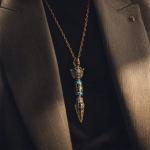
A three-edged shape is awkward in the hand, so the cord goes through the hole at the top and it wears better hanging than held. The ridges are hard, and against skin you feel three edges; under thin summer clothing they press a mark. The hole is small, so the cord has to be thin, and a thick one will not pass. Hung, the point faces down, which is the direction for an implement, so do not hang it the other way; the blades do not face the body. The knot goes at the top and should be small, or it presses.
The phurba shape is widely distributed in Tibet, made in wood, copper and iron. The three faces each stand for a quality, and the accounts differ a little between schools, so do not take one school's reading as the general one. Three-edged blades are hard to cast in copper, and the ridges usually need chasing once to stand up. The division between the faces is the ridge, and it runs all the way to the point; once rubbed round, the thing loses its nerve. The readings of the three faces differ by school; listen and leave it there.
White copper is hard and brittle, and the point fears a knock: a chip cannot be filled. Brush the dust out along the ridges with a soft brush and do not use a needle. It contains nickel. The pendant has a point, so take it off to sleep and do not lie on it; bent, it will not straighten. The ridges catch light while the hollows go dark, so turning it gives a rhythm of light and shade, which is the advantage of the three-edged form. Copper edges brighten, and in time they dull.