


Menu
By theme
By theme

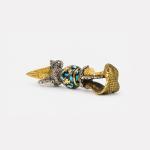
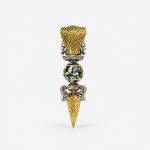

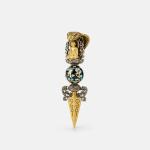
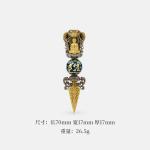
{{ variable.name }} : {{ variable.values[selectedVariantsIndex[variable_index]].name }}
Quantity:
Brass runs warmer than white copper, leaning gold, and in time it darkens and browns, which is where the settled look of old brass comes from. This plaque puts Shakyamuni and a vajra together; a Buddha and an implement on one plaque is a common arrangement in amulets. The Buddha holds the main position and the vajra supports it, and the hierarchy reads clearly on the face. The warmth of brass is the alloy's colour, not plating, so it stays yellow when rubbed. The plaque is a little heavier than white copper and carries weight in the hand. The rim has a raised line and does not press.
Shakyamuni is the founding teacher of Buddhism, and his images follow a formula: snail-shell curls, the ushnisha, the right shoulder bare, seated cross-legged, with hand gestures that vary by period, the style changing with the dynasty. Reduced to a pendant, only the halo and the seated mass survive, and attendants and lotus seat are dropped. The curls can only be cut with a few strokes on copper, and more than that smears. The halo is a fine circle that becomes a single arc at pendant size. The curls are cut shallow and read at a distance as a fine stipple.
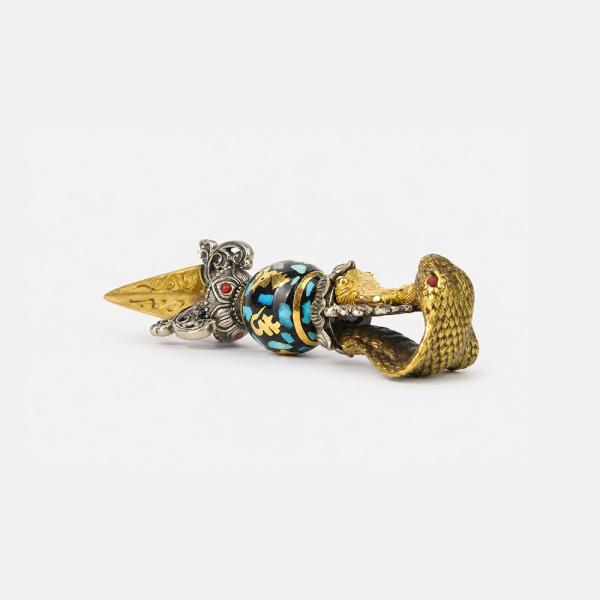
The vajra means what is hard and sharp, cutting through affliction, and on the same plaque as the Buddha it carries the sense of a protector carried along. The pairing is common in Tibet and appears in Han amulets too, where the vajra is simply exchanged for another implement. The prongs are cast short, since long ones break easily and prick. The vajra appears in Han temples as well, mostly in Weituo's hand, and differs considerably from the Tibetan form. The vajra is the protector's tool; the Buddha is the teacher.
Brass is a little softer than white copper, so fine lines press easily but wear faster. Unplated, the surface develops a dark film with wear, and some people prefer that film and deliberately leave it. Others go over it with toothpaste now and then, bring the shine back, and wait for it to dull again. The brown is oxidation rather than dirt, and some like it half wiped and half left. When the film forms, some treat it as patina.
Clean with a dry soft cloth, and when it is badly dull use toothpaste in circles rather than abrasive paper. Brass is high in copper and leaves a green mark on sweat, which matters with white clothing. Alloys differ between makers, so a piece worn against skin wants a steady source, and cheap goods of unknown origin are best avoided. An unplated copper face takes a fingerprint with every touch. Copper dislikes acid, so in summer wipe it before putting it away. The green mark washes out, but wash it promptly, and wipe the plaque before storing it.