


Menu
By theme
By theme



{{ variable.name }} : {{ variable.values[selectedVariantsIndex[variable_index]].name }}
Quantity:
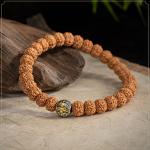
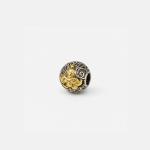
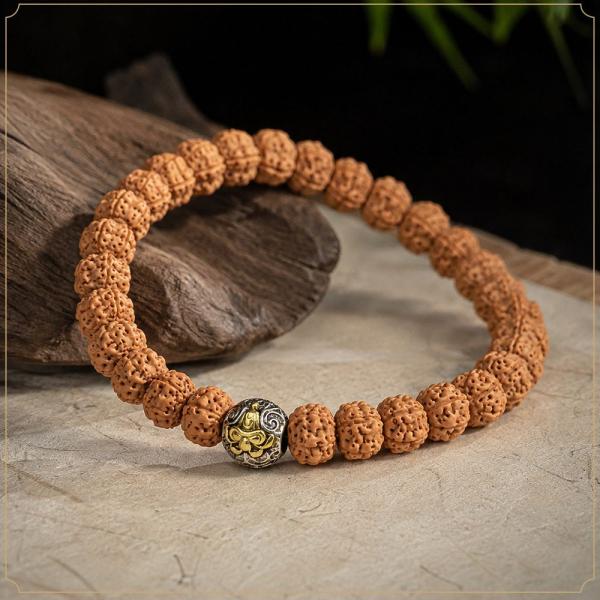
A spacer bead is the single bead strung into a bracelet, sitting between beads, used to divide sections, hold a knot and let the string breathe. The formless Buddha is a Buddha's shape with no features cut, only outline and drapery, so a small bead carries the least possible information. The diameter is smaller than the main beads, so it does not compete when strung and does not block the line of sight. One spacer serves one strand, set on either side of the guru bead, with the knot hidden in the bore.
Formlessness comes from the Diamond Sutra: all that has form is illusory, and also, if you see all forms as no form, you see the Tathagata. A Buddha image with no face cut puts that line into the blade: no specific form is fixed, and the viewer fills it in. Faceless Buddha images exist in every period, in stone and wood, and are especially common in Chan painting. Formlessness is not the absence of expression but the refusal to fix it. The idea is much used in Chan.
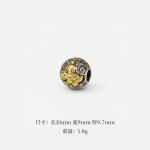
The bore has to match the main strand: too small and the cord will not pass, too large and the bead rattles. Before buying, measure the cord and the bead diameters of your own strand; a spacer usually runs half a size to one size below the main beads, so it does not stand out when strung. The inside of the bore should be polished, since a coarse copper edge works like a small file and cuts a cord after a few passes. If the bore is small, ease it with a fine file rather than a drill bit. Half a millimetre decides whether it goes on, so measure before buying. Measure the cord with a soft tape rather than holding a string against it.
A white copper spacer is heavier than wood, so strung in the middle it pulls the balance down, and as the bracelet turns the spacer always ends up at the bottom. That is not a fault but a matter of weight. If it bothers you, set it on either side of the guru bead, where its position is fixed and it stops showing. If the beads on either side are bodhi seed, pale in colour, the dark of the copper reflects onto them. Wood is light and copper heavy, worth remembering when mixing. The spacer's small diameter makes it recede visually.
A copper spacer rubs against bodhi and wooden beads and in time leaves a dark ring on the bead beside it; if that bothers you, add a soft spacer on each side. Clean with a dry cloth and do not soak it. It contains nickel, so sensitive skin should take note. The bead is small and hard to find if dropped, so keep a steady hand when stringing. Buy spacers in pairs so one is left if a bead is lost. The rim of the bore is thin, so do not force the cord through.