


Menu
By theme
By theme


{{ variable.name }} : {{ variable.values[selectedVariantsIndex[variable_index]].name }}
Quantity:
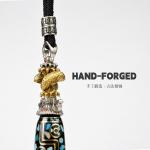
In the order of the Eight Auspicious Symbols, the golden fish comes right after the parasol, near the front of the list. Two fish side by side, eyes wide, fins and tails spread open — the drawing is not realistic. It reads more like a sign than an animal. In Tibet it is taken as ease and sufficiency, things in the water moving back and forth without obstruction. When the pair reached China proper it hooked onto another phrase, nian nian you yu, “a surplus year after year,” where yú is both fish and surplus. Two meanings from different roads ended up on a single motif. On brocade the paired fish are laid out with a deliberate slip inside the symmetry: the two tails are never quite the same length.
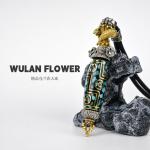
Dzi is the common name for an etched agate bead. In Tibet it is worn as a protective bead, and the pattern is stained in by etching; the contrast between white lines and a dark ground is the whole point. Wulanhua is what the trade calls one of those patterns. The ground is pressed deep, white lines outline rosettes like leaves and petals, and up close you can see them wound out ring by ring. The name has no classical source. Who said it first is anyone's guess. On an old bead the hole is worn to a curve on both sides; a new hole runs straight, and one look under a loupe tells you which you are holding.
White copper is a copper-nickel alloy, silver-white in tone, bright even without plating, and harder than pure copper, so fine work holds up. Alloys with a high nickel content darken at the contact points after long wear; a soft cloth brings them back. People with sensitive skin sweat more in summer, and a piece worn flat against the skin can itch. That should be said before the sale, not after. The silver-white looks crisp against a dark coat; against off-white it smears into the cloth. There is no need to polish it daily. The more you rub, the brighter it gets, and the old softness goes with it. Once a month with a soft cloth is enough.
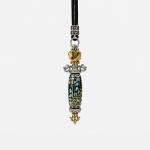
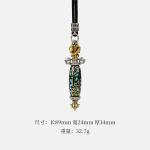
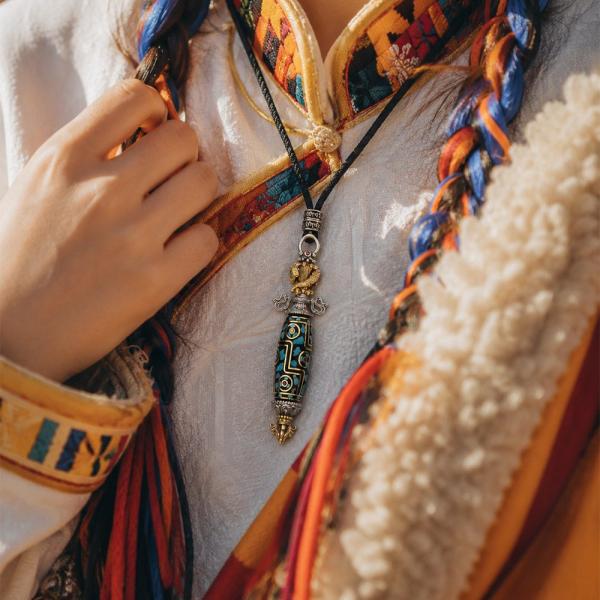
The paired fish carry the dzi from below, so the weight sits low. Take the cord up short or the plaque turns over. The hole is at the top and takes waxed cord or leather; a metal chain fine enough to look right will read as top-heavy. The fins are pierced and their edges thin, so they catch on wool. With a knit sweater it is safer to tuck the plaque inside the collar. In summer, pick a dark cord: a pale one stains and will not wash out. The gap between the two fish lets light through, and against a light shirt it throws a shadow.
As a gift, the paired fish carry a wish for plenty on their own. A wedding or a shop opening both work, and there is no need to drag anything supernatural into it. In Tibet a dzi is usually an heirloom, one bead worn for decades. What I sell is a newly made patterned bead, not an old one, and saying so plainly is better than hedging. A slip of paper in the box naming where the motif comes from leaves the receiver more settled, not less. For a Tibetan friend, ask first whether the family avoids any subject in particular, and give it after you have asked.