


Menu
By theme
By theme


{{ variable.name }} : {{ variable.values[selectedVariantsIndex[variable_index]].name }}
Quantity:
The earliest systematic account of the five phases is in the “Great Plan” chapter of the Book of Documents: water soaks and descends, fire blazes upward, wood can be bent and straightened, metal can be yielded and reshaped, earth is fit for sowing and reaping. All five describe dispositions, not five materials. Later writers spread them into the framework that also holds directions, seasons and colors. Those five lines became the common floor of Chinese medicine, feng shui and fate reading; talk about any one phase and you cannot get around them. The line about earth hands both sowing and harvest to earth.
East belongs to wood, its color green, its season spring. South belongs to fire, red, summer. West belongs to metal, white, autumn. North belongs to water, black, winter. The center belongs to earth, and yellow. The Lüshi Chunqiu already sets the pairs out in good order. In the generating cycle wood feeds fire, fire feeds earth, earth feeds metal, metal feeds water, water feeds wood. In the overcoming cycle each phase goes at the one two places along. Neither cycle is about good or bad luck; they describe an order within a round, and it is when the order jams that something counts as illness. The idea gets repeated wrong all the time, as though whoever overcomes someone is cursed by it.
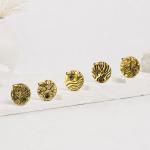
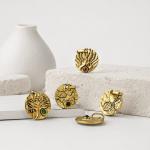
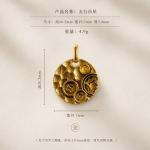
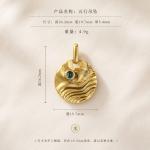
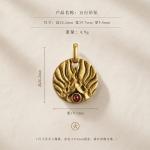
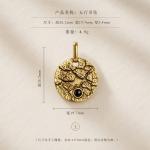
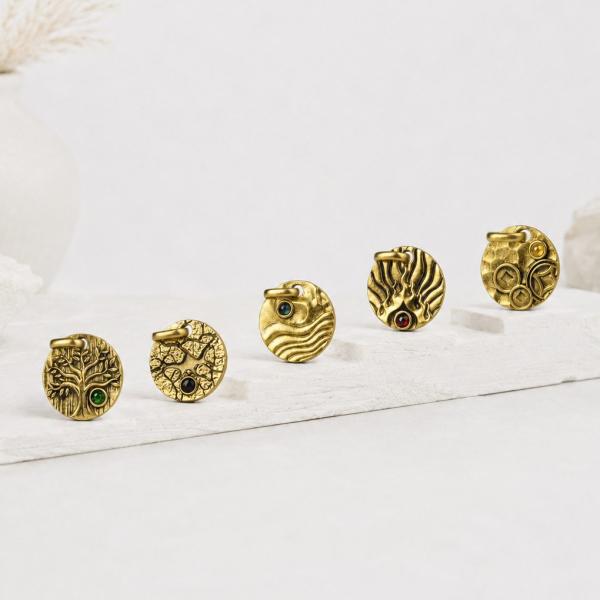
All five are struck from one mold. Only the motif in the middle and the character on the back change; diameter and thickness are identical, so several worn stacked do not fight each other. Which one to pick is often settled by what your birth chart lacks, which is the fortune-teller's road. I do not read charts for people. Liking the color and finding the layer of meaning agreeable is enough. One mold has an advantage: if you want to fill in the other four later, the sizes will match, and in the box it is still a set. A single one on its own does not look bad either.
The base tone of white copper is cool, and the green and black versions read clearest on it. The yellow and red motifs print a little muffled, and need a bright line at the rim to lift them. The back is plain. Turned over it shows casting pits, and any piece with too many should be set aside; this is the most direct place to judge the work. Over time white copper takes a faint yellow cast, which is surface oxidation rather than lost color. It will not polish off, and there is no need. If you want shine, rub it dry with a soft cloth.
For an older relative the earth and yellow versions are the safest, and the wording stays even. For a young person who has just changed jobs, wood and water carry a good word for growth. Some people buy all five and arrange them in the box as a set, then never wear them. In the end this is an ornament. The meaning delivered is enough; do not oversell it. On choosing a color, ask what the person usually wears. That is more accurate than casting a chart. Laying all five out and letting them point is fastest.